MY Blue MIND Lens
The magic of Tortola.
There’s a reason places like Tortola feel less like destinations and more like recalibrations. When viewed through the lens of Blue Zones—regions where people live longer, healthier lives—the island always reveals a quieter, more subtle force at work— not just a slow “island time” lifestyle, but sensory realignment. For an artists like me, Tortola becomes a kind of living inspiration, where the environment itself is an active collaborator informing my work. Activities in nature, like snorkeling have revealed a destruction of the coral reefs because of rising global warmth and more destructive hurricanes.
My work is in part, a passionate plea for viewers to think about our global waters.
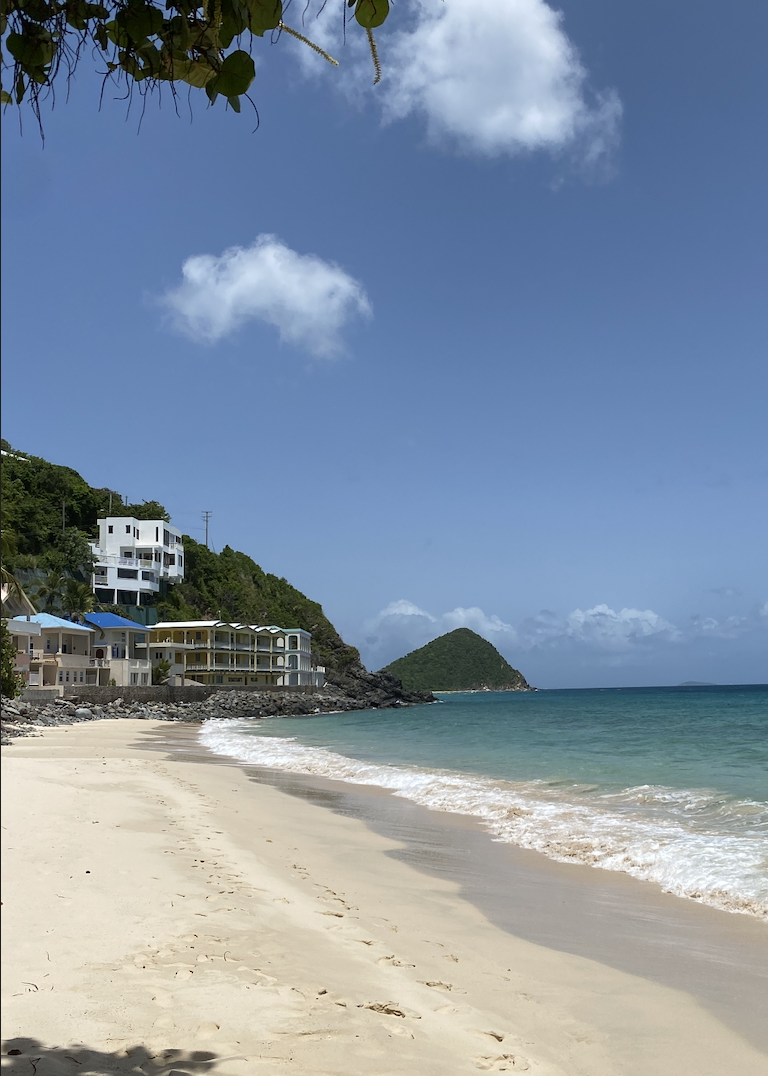
The draw for me begins with rhythm. Ocean waves operate within a naturally regulating frequency—typically around 0.1 Hz, a tempo that closely mirrors the human resting heart rate variability associated with calm and parasympathetic nervous system activation. In simpler terms, the body entrains to the sea. Standing on Tortola’s shoreline, I don’t just observe motion—I subtly get synchronized by it. This gentle repetition creates a cognitive quieting effect, similar to meditative states, allowing deeper perception and creative receptivity. It’s not inspiration as a lightning strike—it’s a slow, tidal opening. For someone with ADD, feeling this balance is essential.
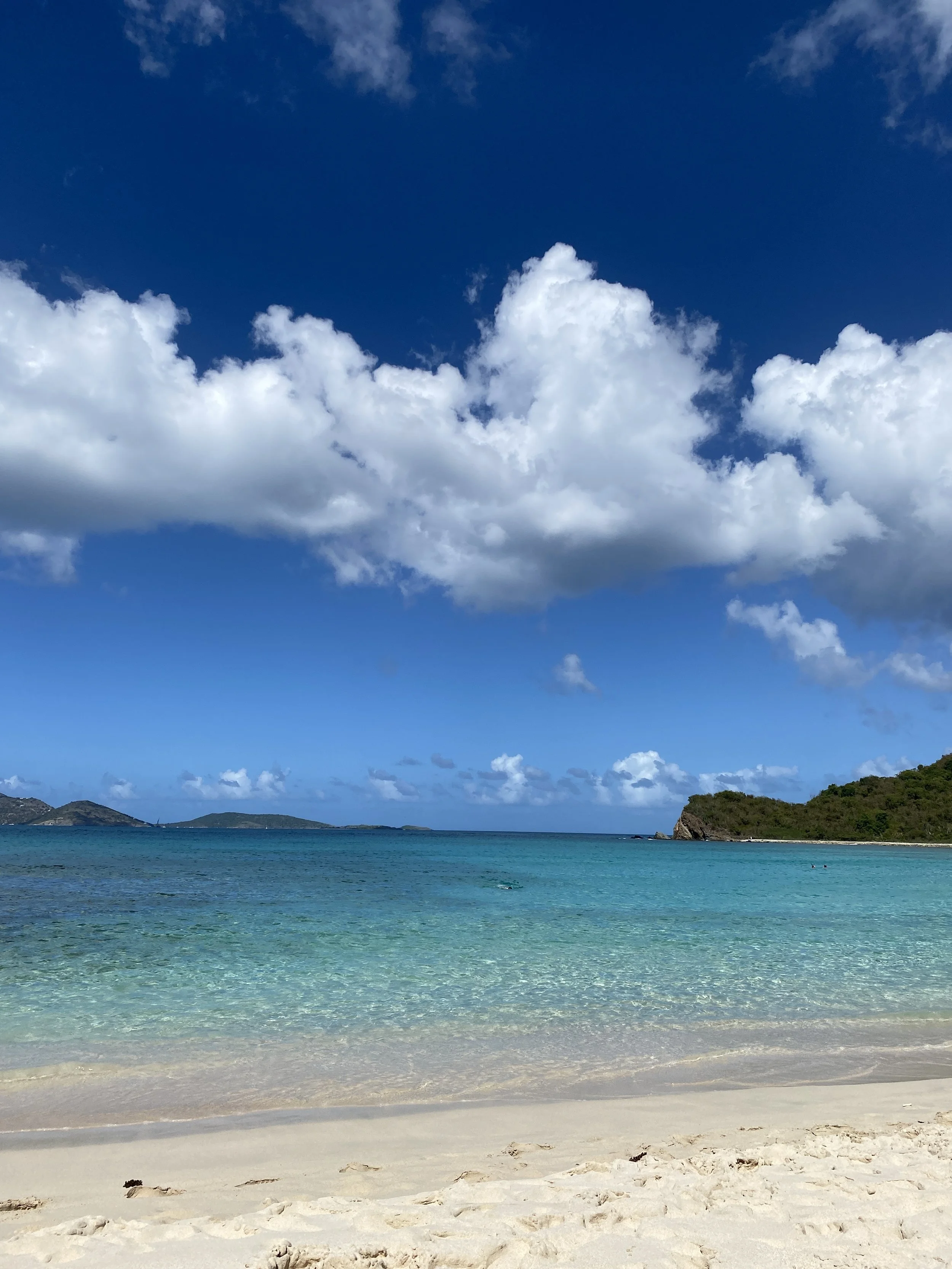
Then there’s that Tortola blue. Not metaphorically, but physiologically. The particular saturation of Caribbean water is caused by the selective absorption of longer wavelengths (reds and oranges) and reflection of shorter blue wavelengths, which creates a visual field that the human brain processes as expansive and so stabilizing. Many studies in Neuroaesthetics suggest that blue-dominant environments can reduce stress, lower heart rate, and enhance cognitive clarity. We feel it every visit. The eye rests, and for myself, my work often navigates complexity, motion and layered meanings, this visual simplicity offers a kind of perceptual reset, that I really believe magnetically pulls me back.
Color, however, is only one layer. Tortola’s textures are equally magnetic. Salt-worn stone and corals, sun-bleached wood, dense tropical foliage and a constant interplay between erosion and growth create a tactile scene that resists polish and celebrate a rugged edge. There’s a rawness that aligns with my interest in layering and material truths—surfaces that carry time, decay and memories of lifetimes. The island absolutely refuses sterility. It insists on presence and nowness.
Light behaves differently there. Positioned closer to the equator, Tortola experiences a more direct solar angle, producing sharper contrasts and a heightened chromatic intensity that invigorates the eye. Whites are brighter, shadows are deeper and colors feel less filtered. This amplifies not only what is seen, but how we see and interpret light. As an artist attuned to nuance, this is not overwhelming—it’s energizing and utterly captivating, especially at golden hour. Oh my!
What makes Tortola especially resonant within the Blue Zones framework is not just its natural beauty, but its integration of sensory experience with real lifestyle. Tourists, travelers, ex-pats and belongers on an 11 kilometer by 3 kilometer island of volcanic hills, salt ponds and deep history of rum, pirates, slavery and perseverance. Movement is embedded everywhere you go, walking uneven terrain, swimming, navigating the elements. Time stretches and disappears in an instant. You treasure each moment. Social interactions are unhurried. There is less interference between the individual and the environment. For me, my work through Juniper Rag often explores these connections—between relationships with locals, ideas and the sense of place—this lack of friction becomes fertile ground. The feeling of escapism is also real and I am sure is a part of it all.
Ultimately, Tortola’s magnetic pull is real for me. It is restorative. It offers a recalibration that I need to a calming frequency over the noise, depth over the hurried speed of life in Massachusetts (when not at the Cape), and sensation over abstraction. In that recalibration, I don’t just find inspiration—I finds realignment, absolute happiness and peace.
Images:
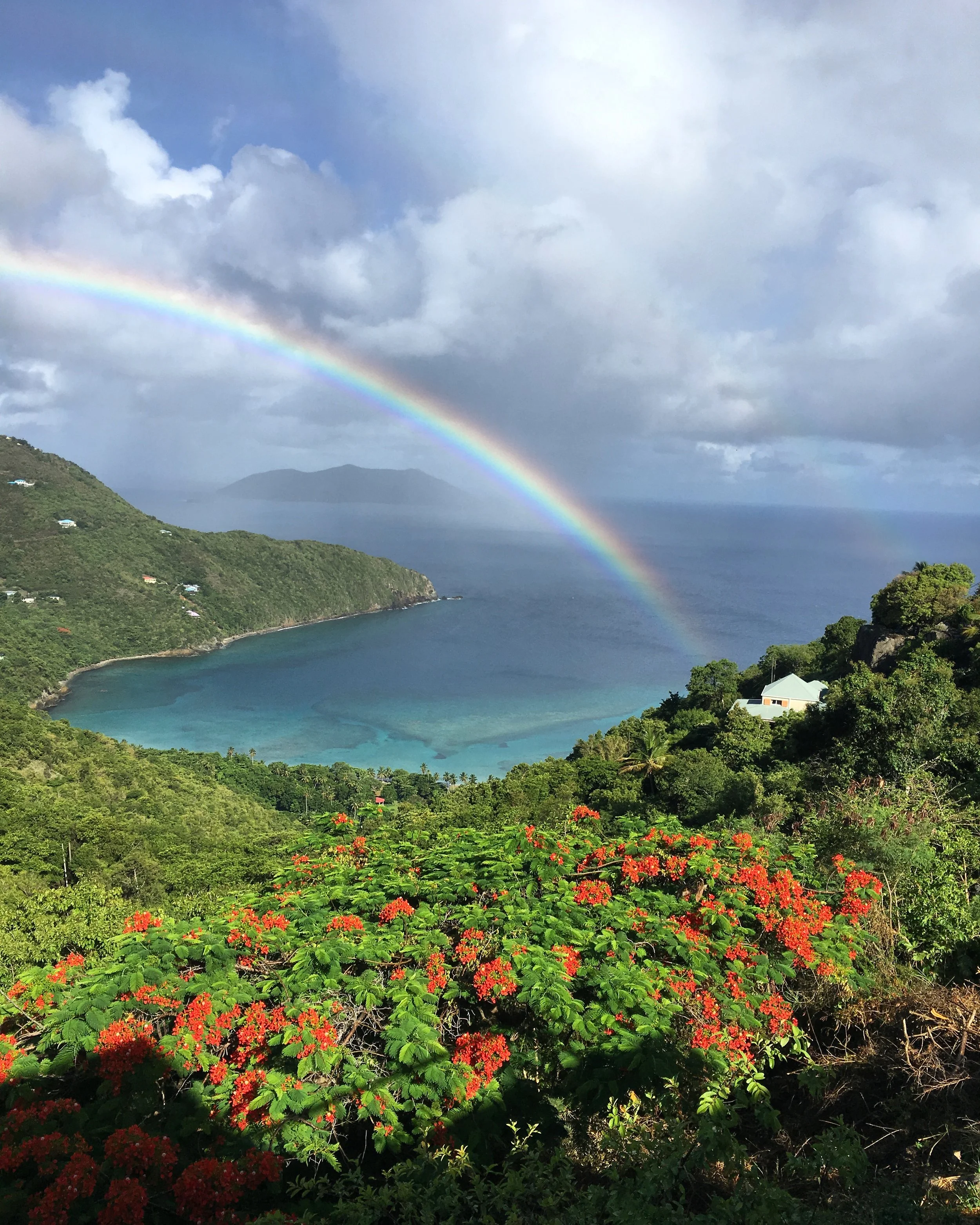
Top: Cliff House
Middle: Rainbow over Brewer’s Bay
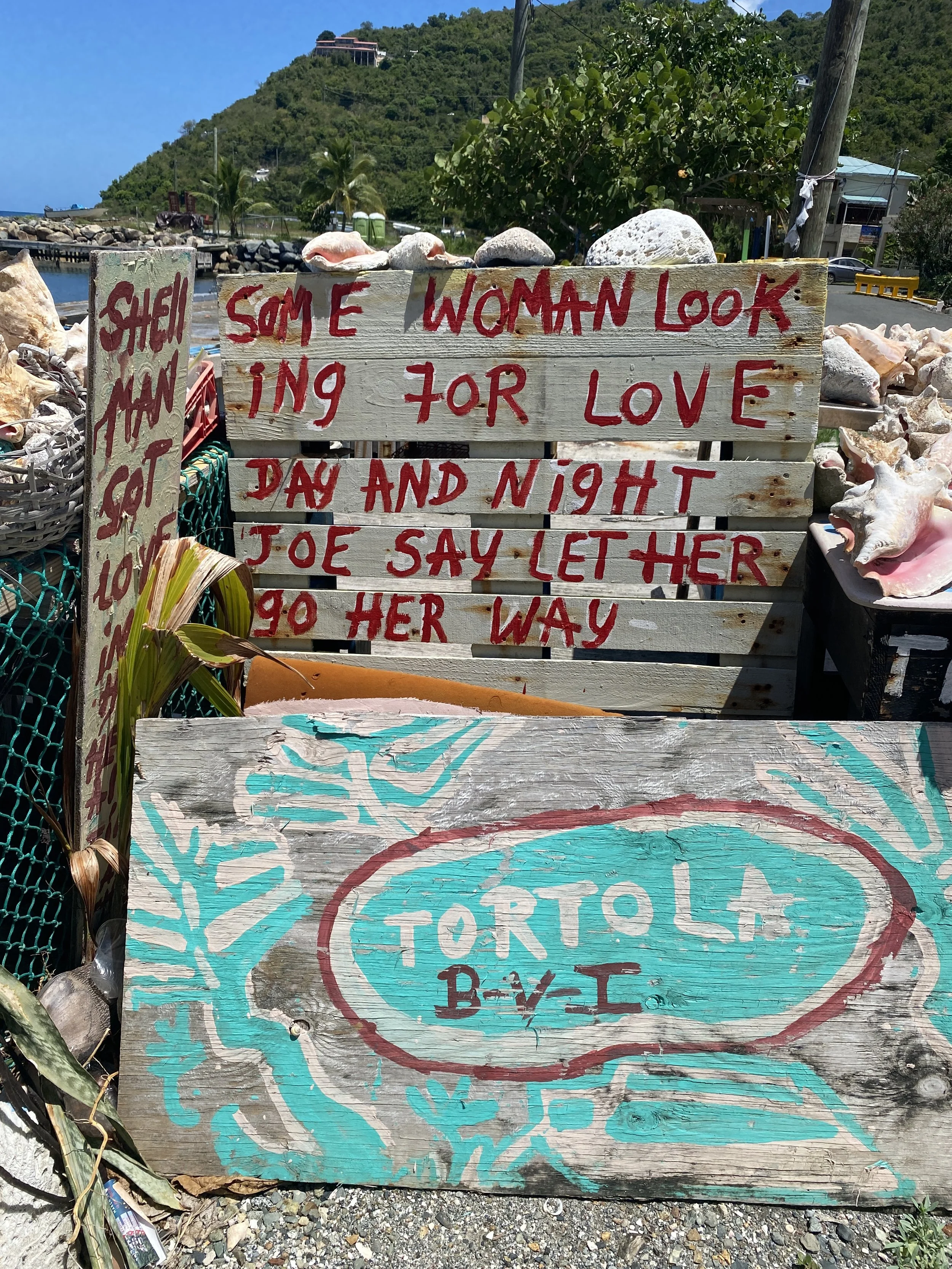
Right: Egberth “The Shell Man” Donovan’s Shell Museum in Carrot Bay, Tortola, where you can often find him singing.
My inquiries began with a quiet but persistent question—what is this relentless pull I feel toward Tortola? Why do I find myself, almost reflexively, scanning Kayak for flights as if responding to something just beneath the surface of logic? And also, what the hell is wrong with me that my mind keeps going here.
By nature, I am a relentless researcher. Curiosity, for me, is not casual, it’s rather compulsive. When something stirs both mind and body this distinctly, I need to understand it. Not romantically, not anecdotally, but structurally. What is happening in the brain? In the nervous system? In perception itself? What combination of environment, frequency, color, and sensation creates this undeniable sense of return? So I read Blue Mind by Wallace J. Nichols. While reading the book, we were staying in Cliff House on the northern shore of Tortola. Researching about the author, I uncovered that he had actually spent time in this very villa and convinced the skeptical journalist that owned it about The Blue Zone theory. That was weird. I felt like I was there for a reason, some force informing my need to make art, inspired by this place.
Because this is not wanderlust in the conventional sense. It feels closer to recognition. As though something in me—neurological, sensory, perhaps even cellular—responds to Tortola with a kind of fluency. The repetition of that response is what sent me deeper. I don’t just plan a trip. I plan my returns when I land and now I bring friends with me who want to experience the luxury of barefoot recalibration.